Valletta, Malta · 2014 · In collaboration with Kitty O'Grady.
Prospettiva
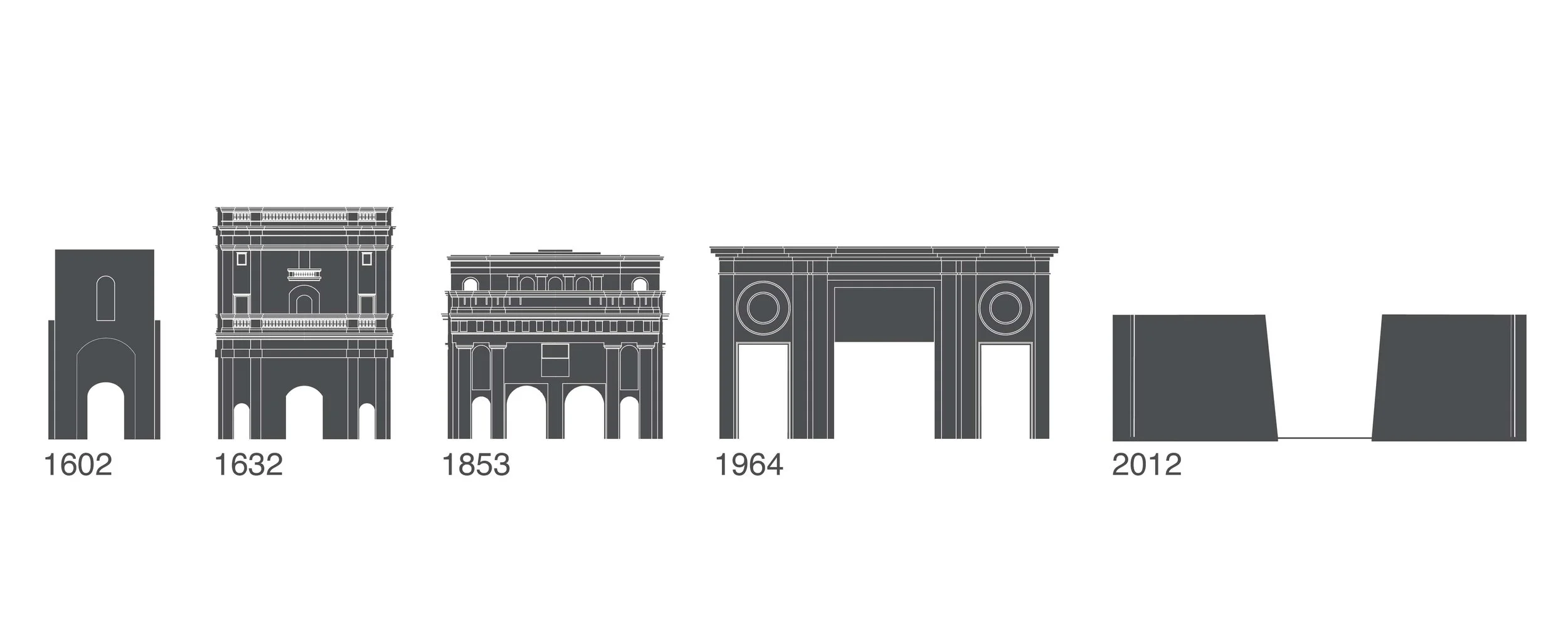
The city’s gates, past and present, mutate into a singular 2D icon, disassembled into different planes and projections.
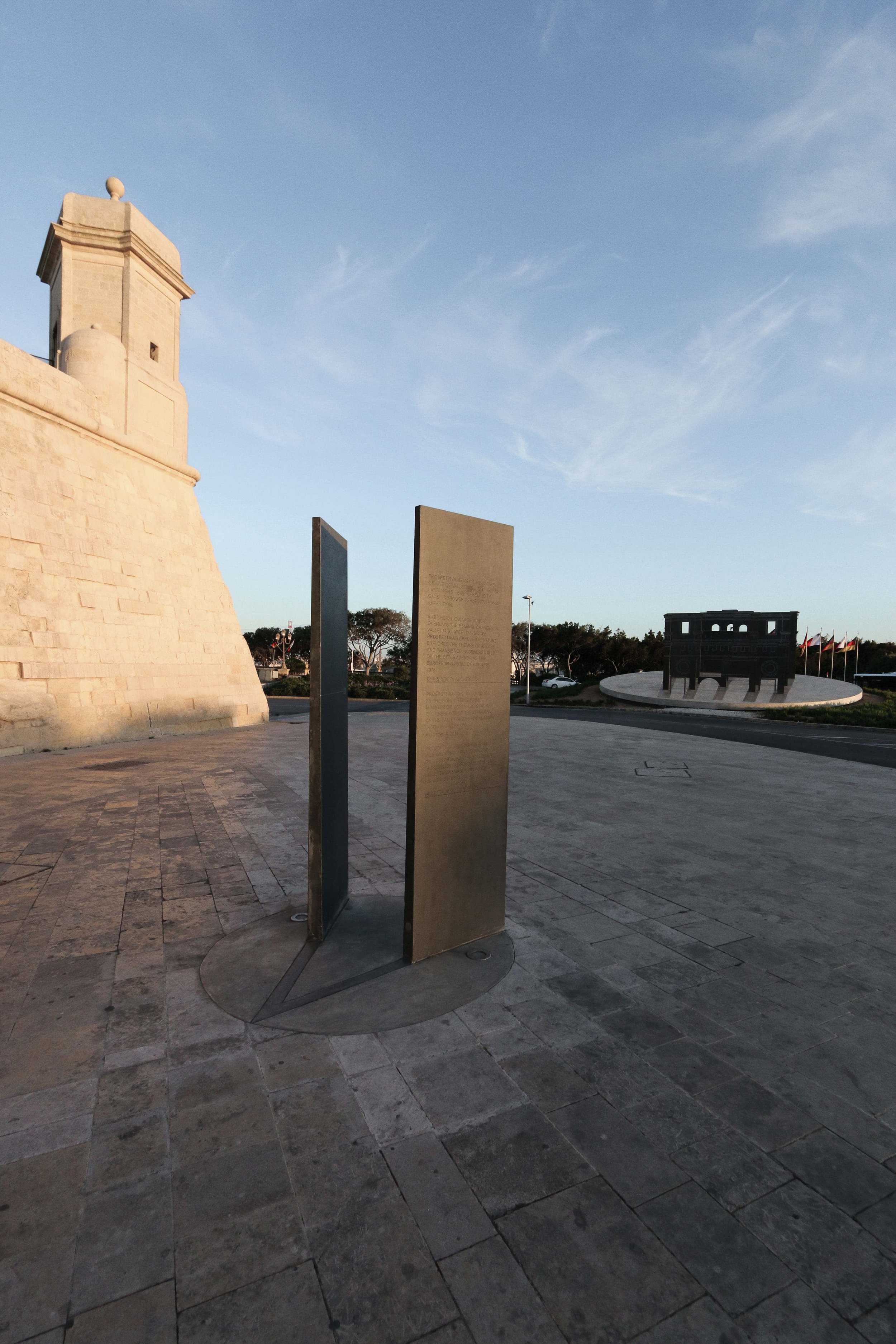
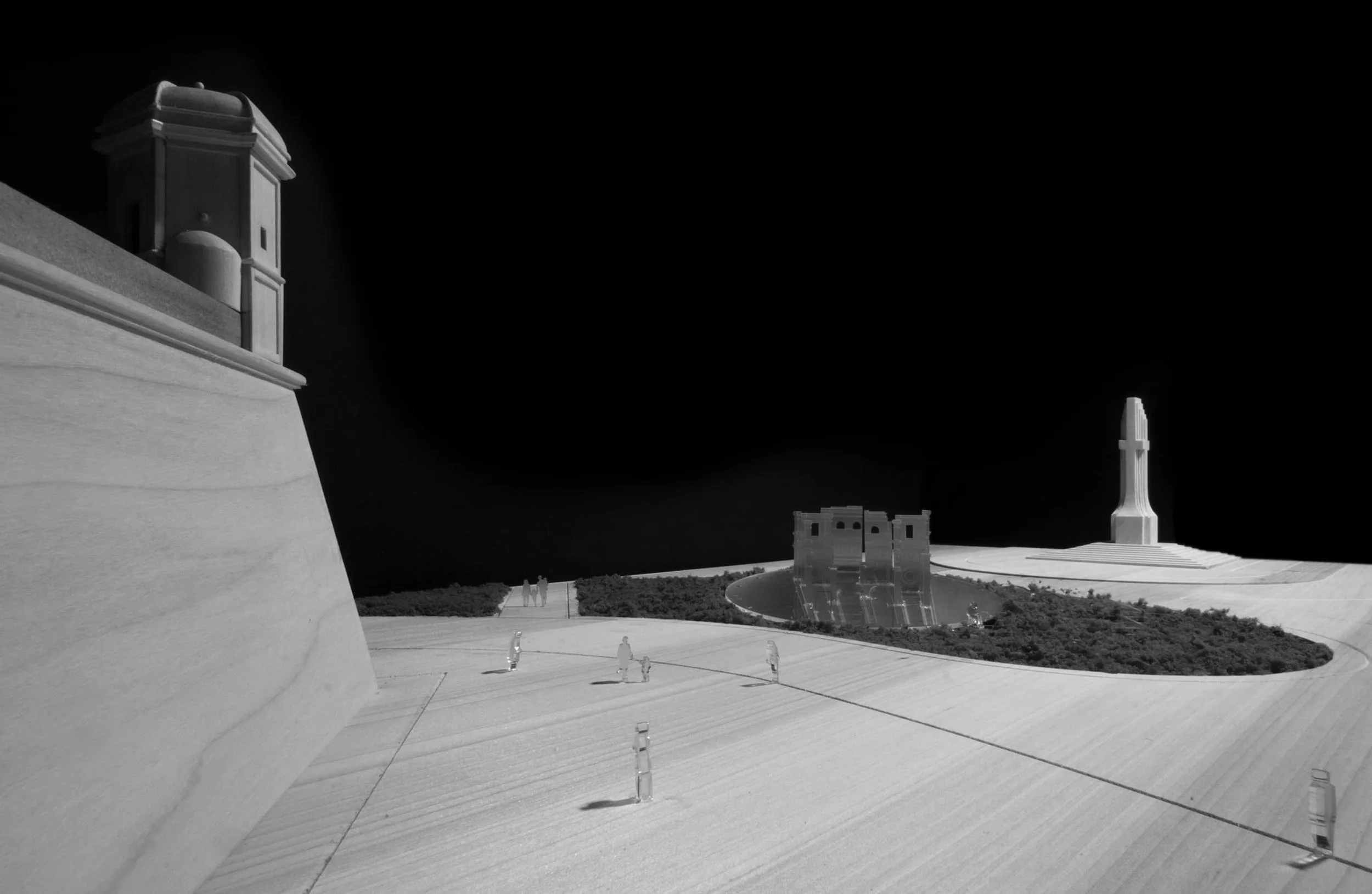
In late 2013, the studio won a competition to design a monument marking Valletta as European Capital of Culture 2018. The site chosen was the main bus terminus, near the capital's main entrance.
At the time, Renzo Piano's City Gate project was nearing completion. Watching two robotic arms demolish the last of the old city gate left a strong impression. That gate had carried the city's architectural story: a palimpsest of layers, each answering to the ambitions of a different era, from the 17th century through to the 1960s.
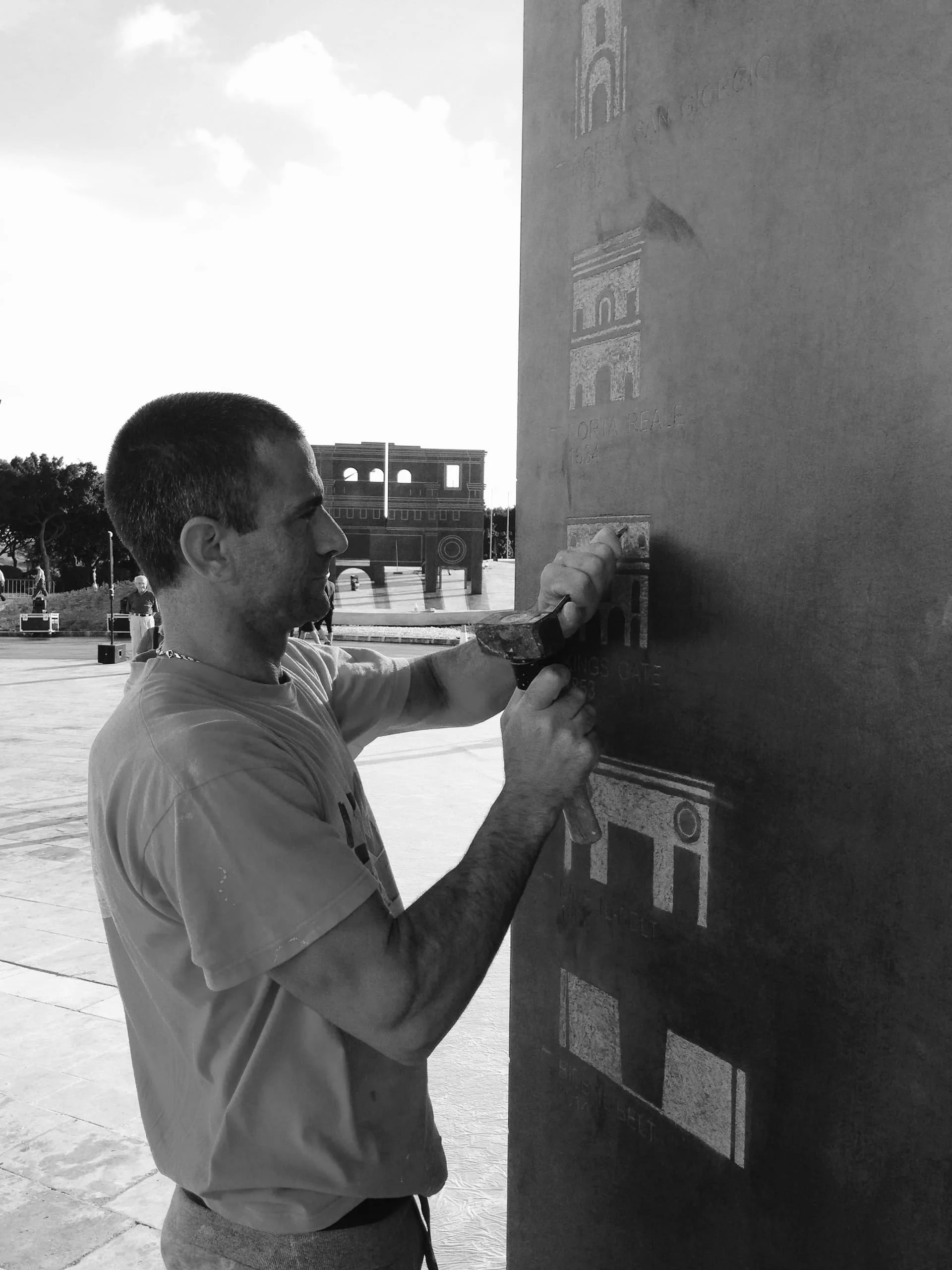
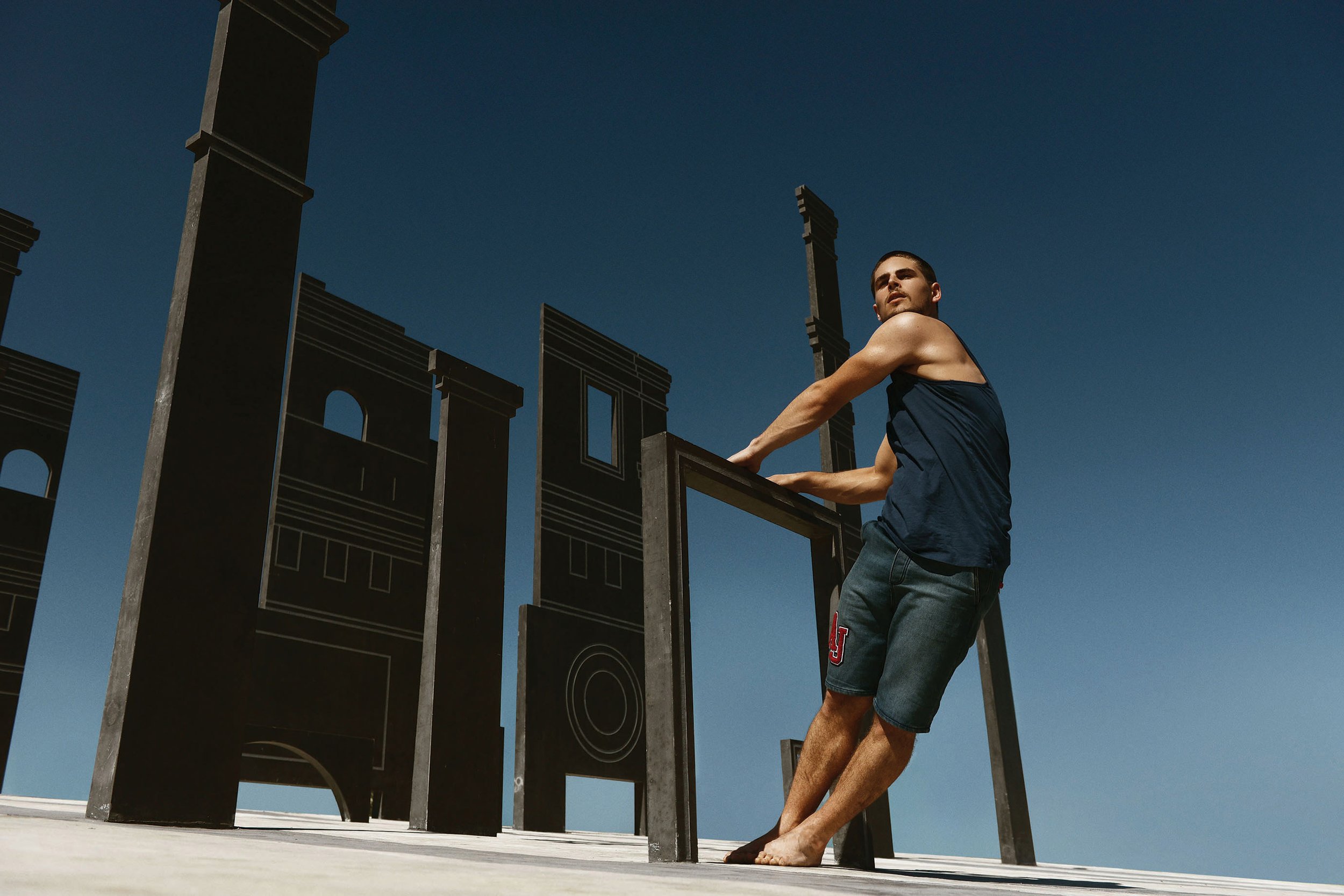
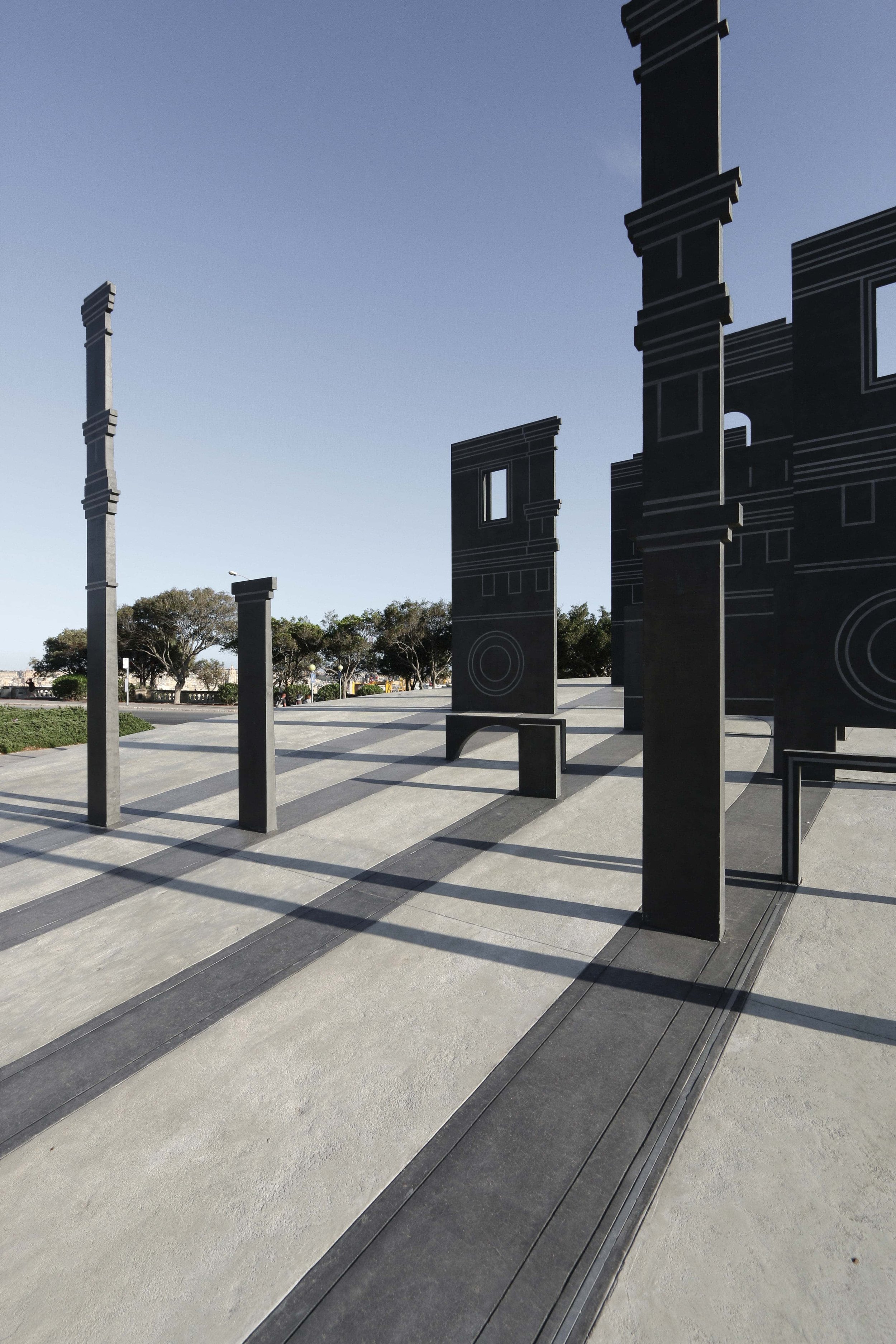
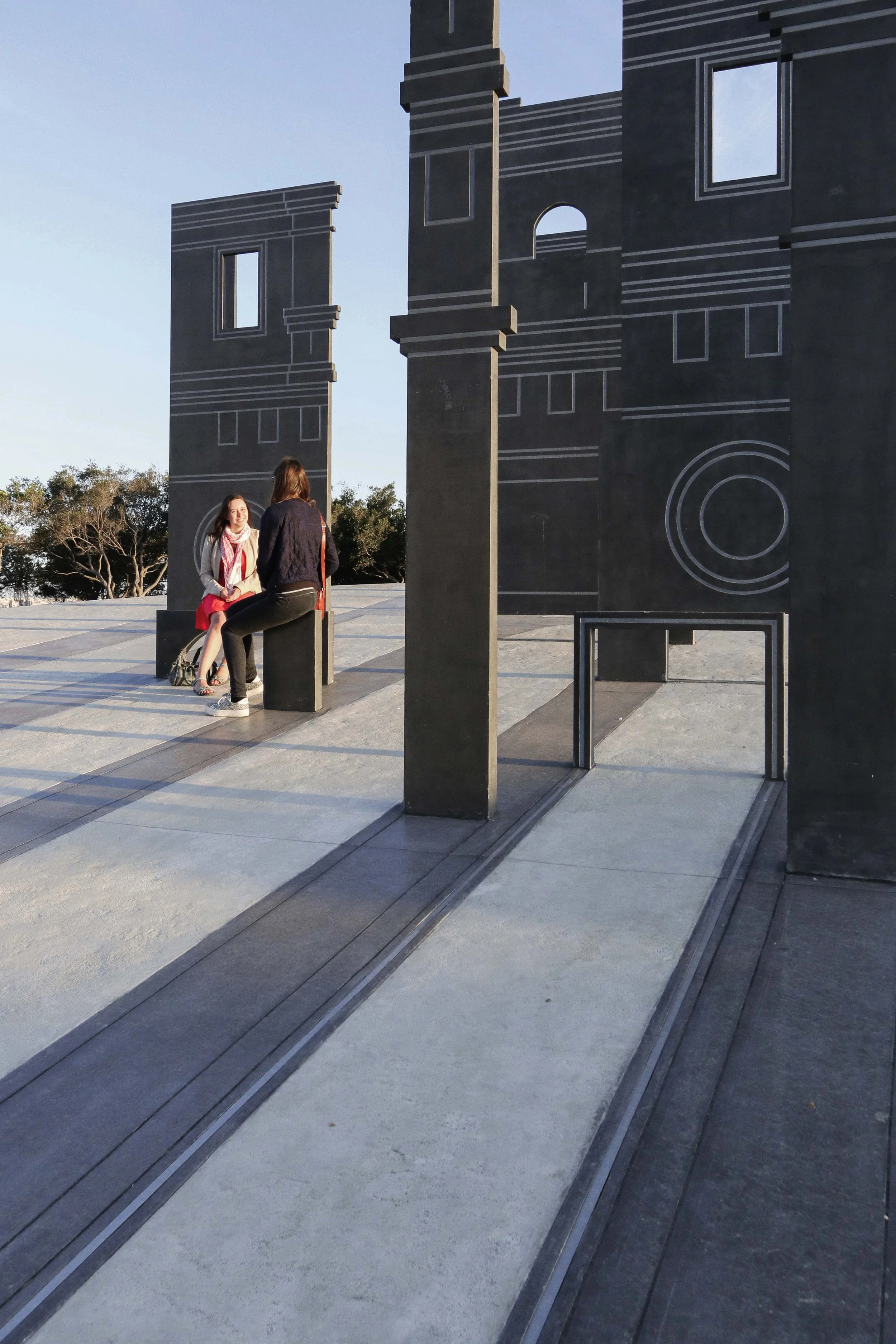
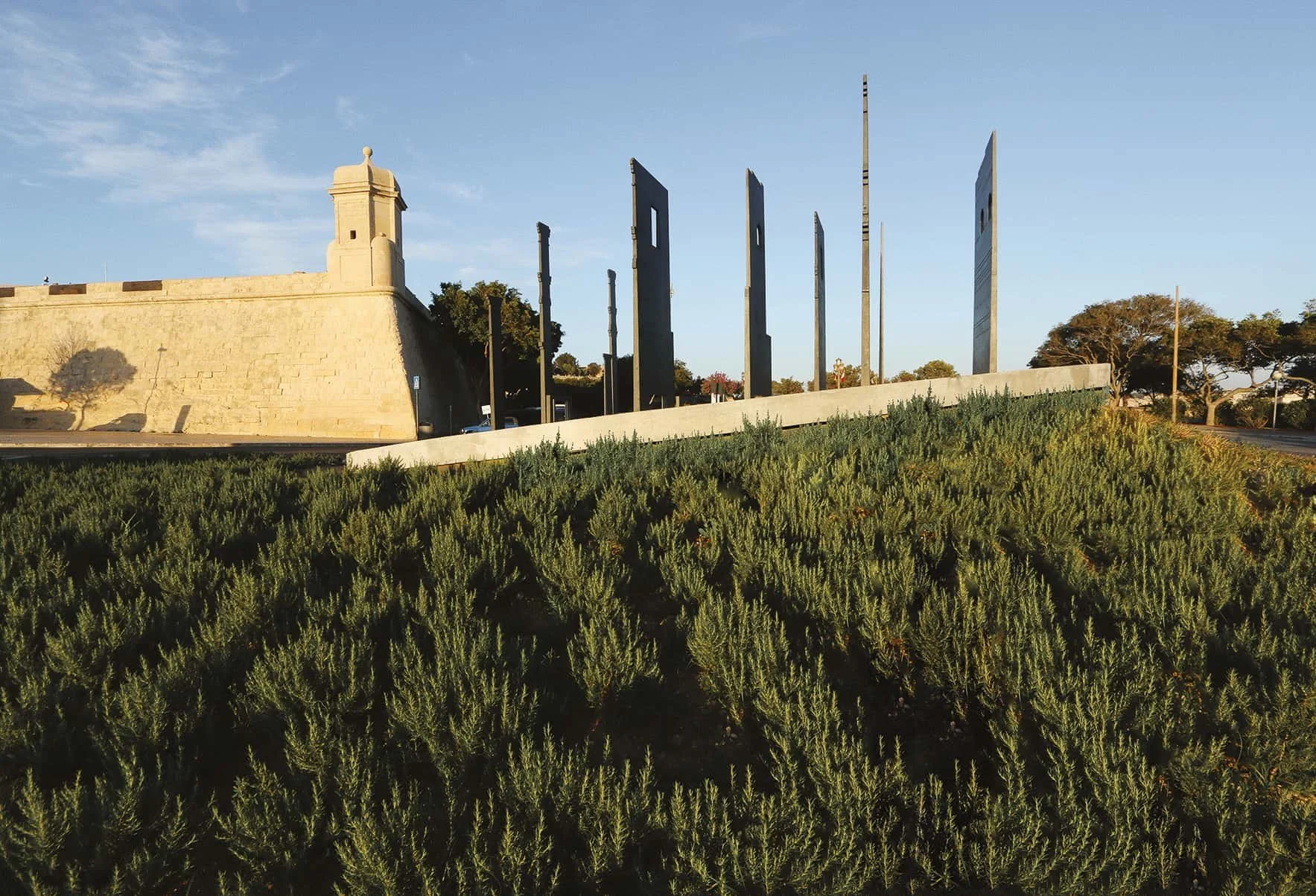
The proposal traces that story as a row of freestanding slabs, stepped along the bastion wall at varying heights. Each is engraved with the faint outline of a historic gate elevation: windows, arches, a roundel. Seen from most angles, they scatter into disconnected fragments, closer to ruins than architecture. Walk the length of the plinth, though, and the planes slowly align, resolving into a single legible icon.
Slabs this thin would normally call for steel, well beyond the project's budget. Ductal, an ultra-high-performance concrete with strength close to steel's, made it possible instead. Each slab was cast just four centimetres thick at its tip, then set out on site with long, precise alignment work to keep every viewpoint resolving correctly.